In recent years, luxury coastal residential design has undergone a major paradigm shift. The historical tendency to erect traditional plantation-style or Mediterranean plaster mansions on delicate marine coastlines has given way to responsive, modernist structures that defer to their natural geography.
Passive Bio-Climatic Orientation
Modern coastal architecture prioritizes passive airflow mechanisms over high-energy HVAC dependency. By understanding local prevailing sea breezes, architects position sliding glass operable louvers and internal courtyard gardens that generate natural cross-ventilation, dramatically cooling interior temperature while maintaining uninhibited ocean panoramas.
Material Resilience in Marine Microclimates
Salt haze, humidity, and intense ultraviolet radiation create harsh structural environments. Leading design firms now utilize board-formed concrete, marine-grade 316 stainless steel alloys, and charred Shou Sugi Ban timber, which develops a natural protective patina over time without decomposing.
Cantilevers and Minimal Ground Footprints
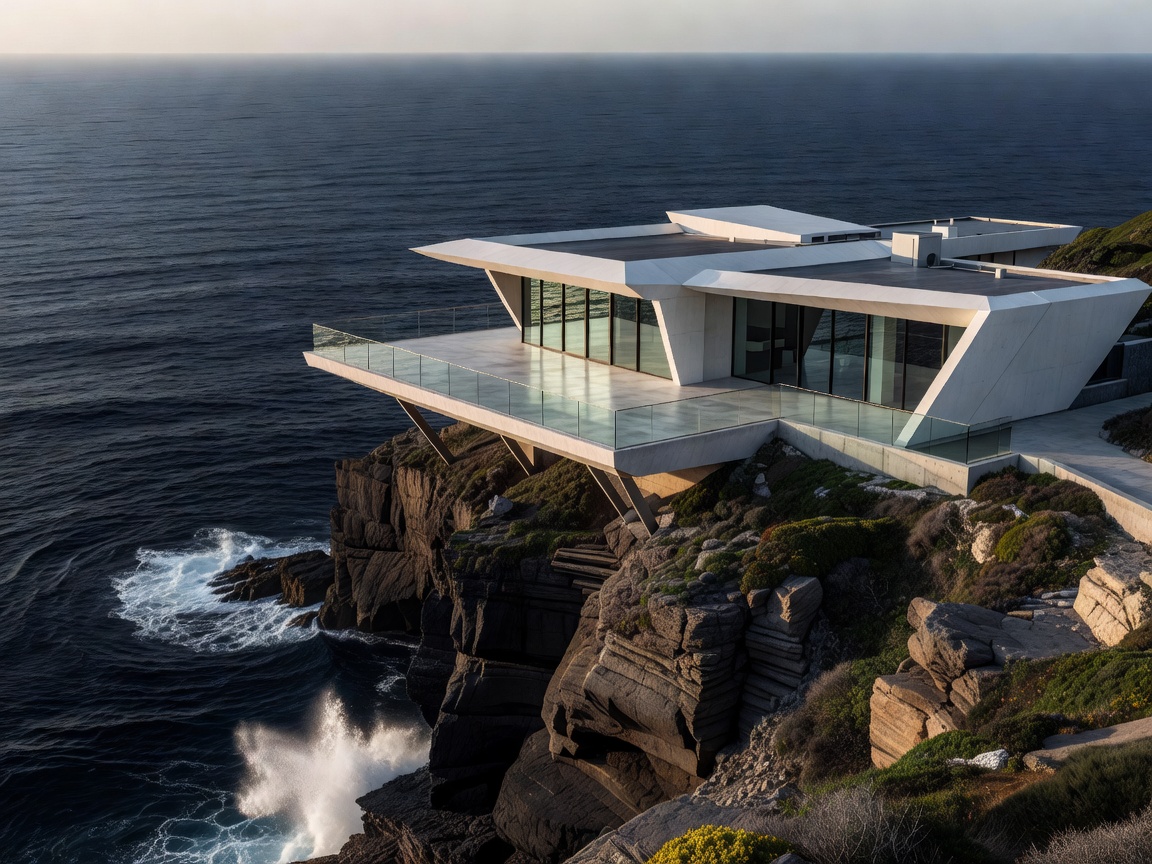
To preserve coastal dunes and shoreline flora, forward-thinking designs elevate primary living spaces onto central architectural pylons. Suspended cantilevers float effortlessly above coastal grasses, minimizing root disruption while providing elevated view corridors across ocean horizons.